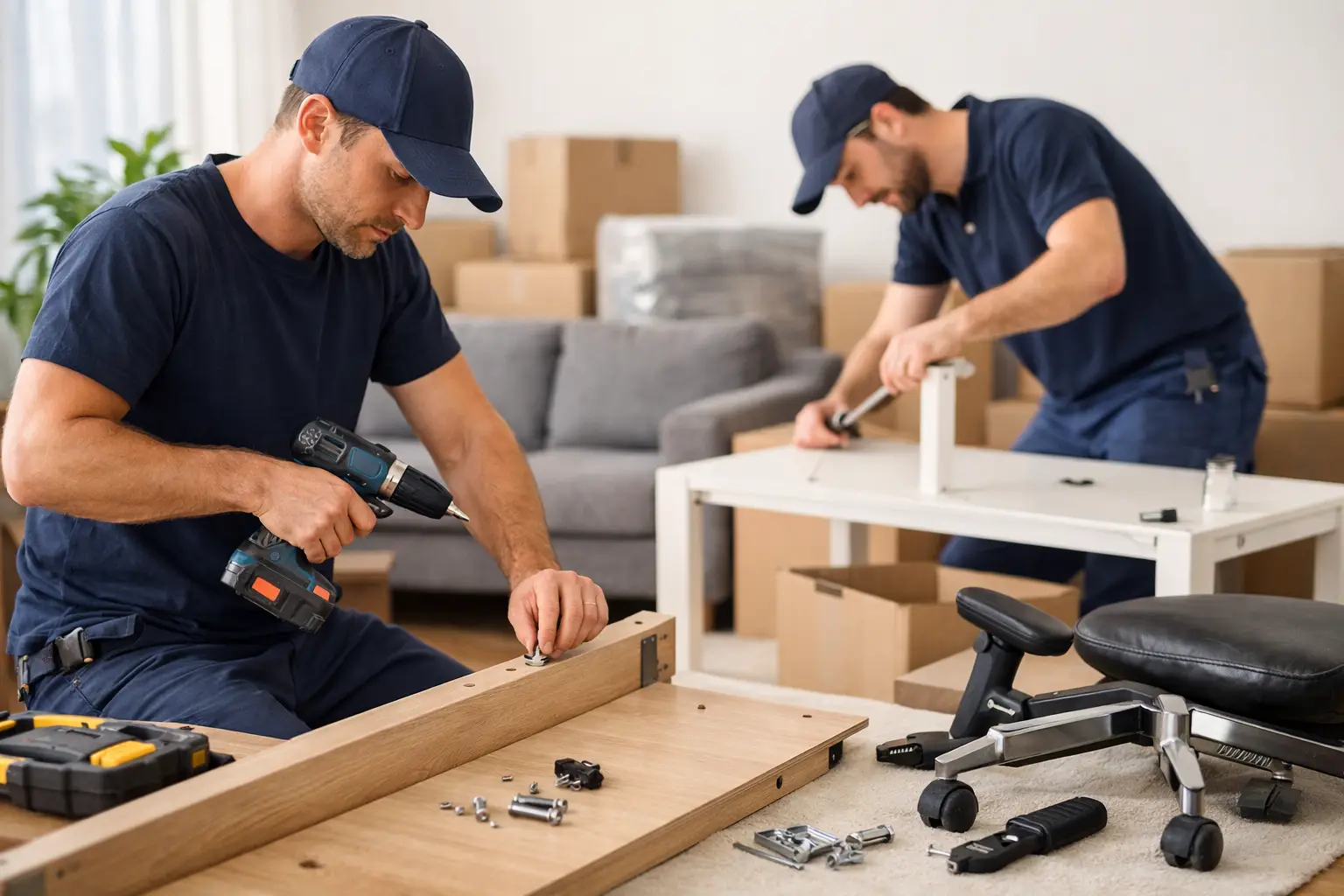
A furniture disassembly moving service is often the difference between a difficult moving day and a well-managed relocation. That oversized sectional, solid wood bed frame, large dining table, or office workstation may look manageable while it is sitting in place. Once it must pass through a doorway, down a staircase, or into a moving truck, the risks become clear.
Professional disassembly gives large furniture a safer path out of your current space and into your new one. It also removes the guesswork of finding the right tools, keeping track of hardware, and figuring out how to put everything back together when you are already surrounded by boxes.
What a furniture disassembly moving service includes
Furniture disassembly is more than taking a few screws out before loading a truck. A professional moving team evaluates each piece, determines which components should come apart, and uses the right tools to do the work without damaging the furniture.
Depending on the item and the move plan, this may include removing bed rails and headboards, separating sectional sofa pieces, taking legs off tables, dismantling desks and shelving, and breaking down office furniture. The movers organize and secure the hardware so it stays with the correct item throughout transportation.
Once pieces are disassembled, they should be wrapped and protected before they are moved. Corners, glass, finished wood, upholstery, and delicate components all need appropriate care. At the destination, the team brings the pieces inside, reassembles them where requested, and checks that they are stable before moving on.
That complete process matters. Disassembling furniture without a plan for protection, labeling, transport, and reassembly only shifts the work to a more stressful point in the move.
Why large furniture often needs to come apart
The main reason is simple: furniture was built for your home or office, not necessarily for the route between buildings. Tight hallways, narrow stairwells, elevators, door frames, sharp turns, and parking constraints can all limit what can be safely moved in one piece.
A king-size bed frame may not fit around a stair landing. A desk that cleared the front door when it was delivered may not clear it after a renovation, new railing, or different moving angle. In an office setting, a large conference table can be too heavy and awkward to carry safely without removing its legs or base.
Disassembly can protect the furniture, but it also protects the property. Trying to force a large item through a tight opening can lead to scratched floors, dented walls, broken trim, torn upholstery, or damaged furniture joints. Taking the time to separate the right components is usually faster than dealing with avoidable damage.
Furniture that commonly requires disassembly
Beds are among the most common items because frames, rails, slats, and headboards are easier to carry separately. Dining tables, especially those with heavy tops or removable legs, are another frequent example. Sectionals may need to be separated into individual pieces to fit through doorways and to make lifting safer.
Office furniture deserves the same attention. Desks, cubicle systems, conference tables, bookcases, and modular workstations can involve multiple parts and hardware. An organized approach helps keep each employee’s workspace or department setup together, which makes reassembly at the new location more efficient.
Not every item should be taken apart. Some furniture is designed to move intact, while other pieces can become less stable if repeatedly disassembled. Older furniture, particleboard pieces, antique items, and poorly constructed items may require a more careful assessment. A dependable moving provider will explain the recommended approach instead of treating every item the same way.
The value of professional reassembly at your new location
Getting furniture into the new home or office is only part of the job. A bed frame with missing hardware or a desk assembled in the wrong room can create unnecessary work after the movers leave.
Professional reassembly helps your new space become usable sooner. Beds can be set up for the first night. Dining tables can be placed where they belong. Desks and workstations can be assembled according to the agreed layout. For families, that means less disruption during an already busy transition. For businesses, it can help reduce the time employees spend waiting for their work areas to be ready.
There is also a practical safety benefit. Furniture that is not properly reassembled can wobble, strain at connection points, or fail under normal use. Experienced movers know how to reconnect common furniture components and confirm that pieces are secure.
How to prepare for furniture disassembly on moving day
You do not need to disassemble furniture before your moving team arrives unless that is part of your plan. In fact, doing it yourself can create confusion if hardware is misplaced or components are left unprotected. There are still a few helpful steps you can take before moving day.
First, point out any furniture that you know is oversized, unusually heavy, fragile, or difficult to move. Let the moving company know about staircases, elevators, narrow doorways, long carries, or parking limitations. Clear information before the move supports an accurate quote and helps the team arrive prepared.
Second, remove personal belongings from drawers, desks, cabinets, and shelves. This reduces weight, prevents items from shifting, and allows movers to protect the furniture properly. If a piece has removable glass shelves, decorative parts, or special instructions from the manufacturer, share that information before work begins.
Finally, decide where major pieces should go at the destination. You do not need a perfect floor plan, but knowing where beds, tables, sofas, and desks belong can save time during reassembly. It also reduces the chance that a large piece must be moved twice.
Questions to ask before booking the service
A furniture disassembly moving service should be clearly discussed as part of your moving plan, not treated as an assumption. Ask whether disassembly and reassembly are included in the estimate, which furniture items are covered, and how hardware will be handled. If you have specialty items, ask whether they require additional preparation or a different service approach.
It is also wise to ask about packing and wrapping. Disassembled furniture is easier to carry, but individual components can still be scratched, chipped, or damaged if they are not protected during loading and transportation. Quality moving materials and careful handling should be part of the conversation.
For office moves, discuss timing and setup priorities. Some businesses need conference rooms, reception areas, or key employee workstations ready first. Others may need the move completed outside regular business hours to limit disruption. The right plan depends on your operation, your schedule, and the furniture involved.
A better way to manage a Dallas-Fort Worth move
Dallas-Fort Worth moves can involve apartment elevators, suburban staircases, high-rise offices, long driveways, and busy commercial buildings. The physical distance may be local, but the work can still be complex. Furniture disassembly and reassembly are valuable because they bring order to one of the most demanding parts of the process.
Triple 4 Moving and Shipping Company approaches each move with a tailored plan based on your furniture, access conditions, timing, and destination needs. The goal is not simply to load a truck. It is to handle the practical details with honesty, reliability, efficiency, and fairness so you can focus on settling into what comes next.
Before your move, walk through your largest furniture pieces and identify anything that may not travel safely in one piece. Sharing those details early gives your moving team the information needed to protect your belongings, prepare the right equipment, and help your new space feel like home or work sooner.
Leave a Reply