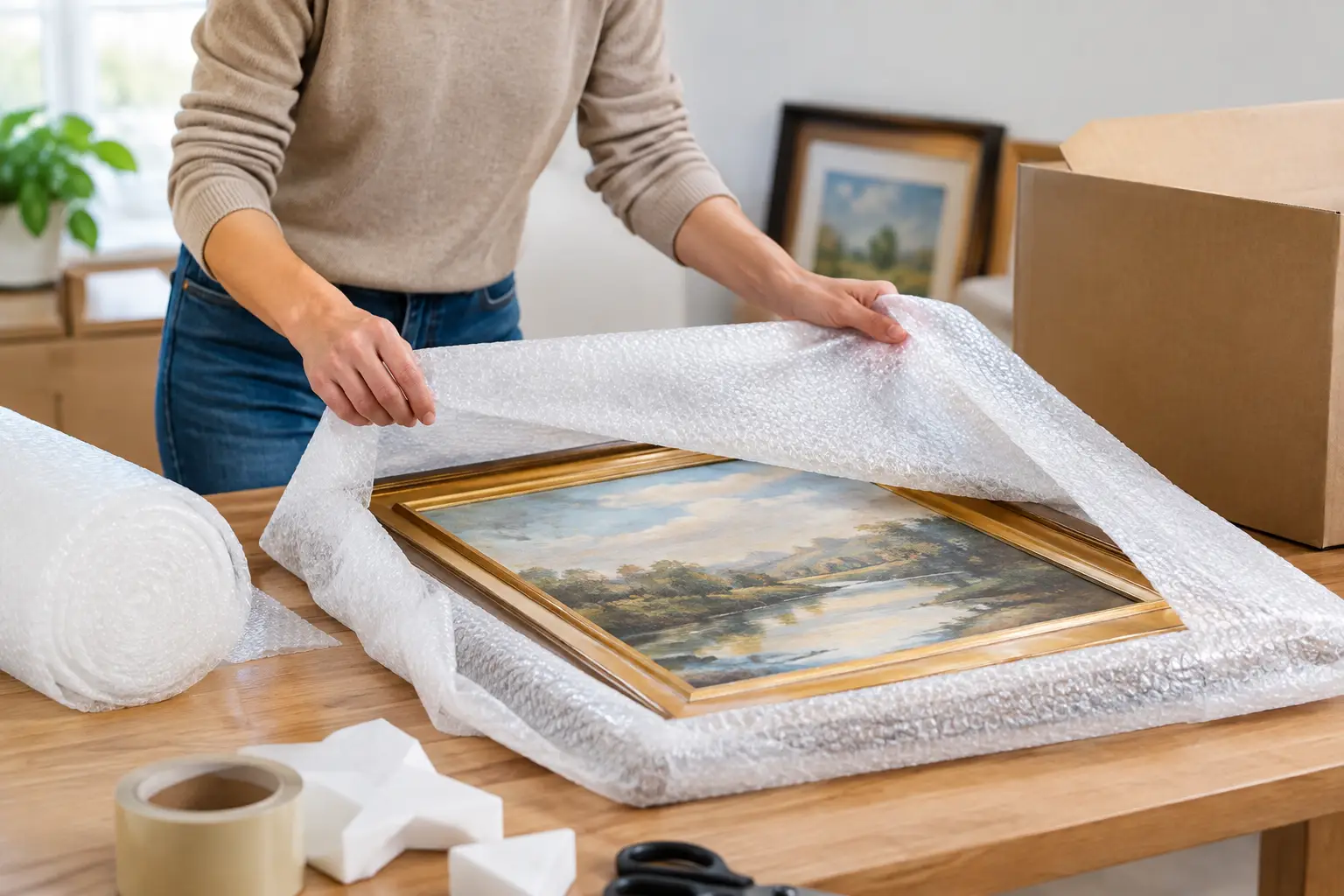
A framed painting can look perfectly secure on a wall, then become one sharp turn away from cracked glass, a punctured canvas, or a damaged corner. Learning how to pack artwork safely is less about using more tape and more about using the right protection in the right order. Each piece needs to be stabilized, cushioned, and kept from shifting during the move.
Whether you are moving across Dallas-Fort Worth or to another Texas city, give artwork the same attention you would give a fragile heirloom. Paintings, framed prints, mirrors, photographs, and sculptures all have different weak points. A careful packing plan protects their value, appearance, and the memories they hold.
Start by Sorting Artwork by Type and Condition
Before wrapping anything, take inventory. Photograph each piece from the front, back, and corners, especially if it is valuable, antique, or already has minor wear. This creates a useful record of its condition before the move and helps you decide which items need professional handling.
Separate artwork into groups: framed pieces with glass, canvases without glass, oversized or heavy frames, unframed prints, and three-dimensional art. Do not pack a glass-framed print the same way as an oil canvas. Glass can shatter under pressure, while a canvas can be dented if anything presses into its surface.
Remove loose hanging hardware when practical. D-rings, wire, hooks, and screws can snag wrapping materials or scratch another piece. Place removed hardware in a small labeled bag and tape that bag securely to the back of the frame. Never tape directly onto the painted surface, printed image, or finished wood.
Gather Materials That Protect, Not Just Fill Space
Good packing materials prevent impact and movement. Old blankets or newspapers can be useful in some situations, but they are not a complete substitute for clean, purpose-made protective materials. Newspaper ink may transfer, and loose blankets can leave hard edges exposed.
For most artwork, prepare clean packing paper, glassine or acid-free tissue paper, plastic stretch wrap, bubble wrap, painter’s tape, corner protectors, sturdy cardboard, packing tape, and correctly sized picture boxes. You may also need foam board for large framed pieces and packing peanuts or foam for sculptures.
Avoid placing bubble wrap directly against an unprotected canvas or painted surface. Temperature changes and pressure can leave impressions or cause the wrap to stick to delicate finishes. Put a clean, non-abrasive layer such as glassine between the artwork and any plastic-based material.
How to Pack Artwork Safely With Glass
Glass-fronted frames need an extra layer of protection because broken glass can damage both the artwork and the frame. Start by placing painter’s tape across the glass in a large X. For bigger pieces, add a few horizontal and vertical strips to create a loose grid. This will not stop glass from breaking, but it can help hold fragments together if an impact occurs.
Cover the glass with a sheet of cardboard cut slightly larger than the frame. Use painter’s tape to secure the cardboard to itself around the edges, rather than sticking aggressive tape to the frame. Add corner protectors next, since corners are usually the first point of contact when a box is bumped or set down.
Wrap the protected frame in packing paper or glassine, then use at least one layer of bubble wrap around the outside. Secure the wrap with tape, keeping tape off the frame whenever possible. Slide the piece into a picture box that allows room for cushioning but does not let it slide from side to side.
If the frame is especially valuable or large, use two telescoping picture boxes or build a cardboard sandwich with foam board on both sides. The goal is a firm, flat package that cannot flex during transport.
Protect Canvases Without Pressing on the Surface
A stretched canvas is lighter than a framed glass piece, but it is not automatically safer to move. Even a small amount of pressure can create a dent, tear the canvas, or crack dried paint. Never stack heavy items on a canvas, even when it appears well wrapped.
First, cover the front with glassine or clean acid-free tissue. Add cardboard corner protectors, then wrap the entire canvas loosely with stretch wrap to hold the protective layer in place. The wrap should secure the package, not pull tightly across the canvas face.
For smaller canvases, add bubble wrap around the outside and place them upright in a properly sized box. For large canvases, create a rigid protective layer using foam board or clean cardboard on both sides before wrapping. Keep them vertical during loading and transport. Flat placement can be appropriate for very small, fully supported pieces, but vertical packing is generally safer for framed art and canvases because it reduces weight pressing down on the surface.
Use the Right Box and Fill Empty Space Carefully
The best box is one that fits the artwork with limited open space. A box that is too large encourages movement, while a box that is too tight can put pressure on the frame. Picture boxes are designed for flat pieces and are usually a better choice than standard moving cartons.
Line the bottom of the box with a small amount of cushioning. Place the artwork inside vertically, then fill any remaining gaps with crumpled packing paper or foam. Do not force material tightly against the face of a canvas or glass. The package should feel secure when gently moved, but not compressed.
If several small framed pieces must share a box, wrap each one separately and place a rigid cardboard divider between them. Never allow glass fronts to touch. Keep similarly sized pieces together whenever possible, and avoid mixing artwork with books, tools, kitchen items, or other heavy household goods.
Label Every Piece for Careful Handling
Clear labels help movers and family members make better decisions at every stage of the move. Mark boxes on multiple sides with “FRAGILE,” “ARTWORK,” and “THIS SIDE UP.” For an individual piece that should remain vertical, add arrows showing the correct orientation.
Labeling is not a replacement for proper packing. It is a final instruction for the people loading, unloading, and unpacking the truck. A box marked fragile still needs strong corners, stable contents, and a secure place in the vehicle.
Keep a simple inventory list with the room where each item belongs in the new home or office. That makes unpacking more organized and reduces the chance that artwork sits forgotten in a garage, storage room, or busy hallway after moving day.
Load Artwork Last and Secure It Upright
Even a well-packed picture box can be damaged by poor loading. Artwork should be loaded upright along a secure wall of the moving truck, not laid under furniture or stacked beneath heavy boxes. Place it where it cannot slide, tip, or receive direct pressure from a shifting item.
Use moving pads around the outside of boxed artwork and secure the area with straps when appropriate. Do not place unprotected frames directly against furniture, appliances, or metal truck walls. Large mirrors, oversized framed art, and valuable originals deserve particular care because their size makes them harder to stabilize.
Temperature and moisture matter, too. Avoid leaving artwork in a hot vehicle, direct sun, or a damp storage space for longer than necessary. This is especially relevant for oil paintings, older photographs, wood frames, and pieces with sentimental or financial value.
Know When Professional Packing Is the Better Choice
Some artwork is too valuable, delicate, heavy, or unusual for a standard DIY packing approach. Original paintings, antiques, oversized mirrors, sculptures, shadow boxes, and pieces with fragile finishes may need custom crating or specialized packing. The added cost can be worthwhile when the alternative is risking an irreplaceable item.
A professional moving team can assess the size, material, and condition of each piece before selecting wrapping, boxing, and loading methods. Triple 4 Moving and Shipping Company helps Dallas-Fort Worth households and businesses with careful packing, wrapping, lifting, and transportation tailored to the belongings being moved.
When you unpack, open artwork boxes in a clean, low-traffic area and inspect each piece before hanging it. Give frames and canvases time to adjust to the temperature inside your new space, especially after a long move. A few patient minutes at both ends of the relocation can keep your artwork ready to enjoy for years to come.
Leave a Reply