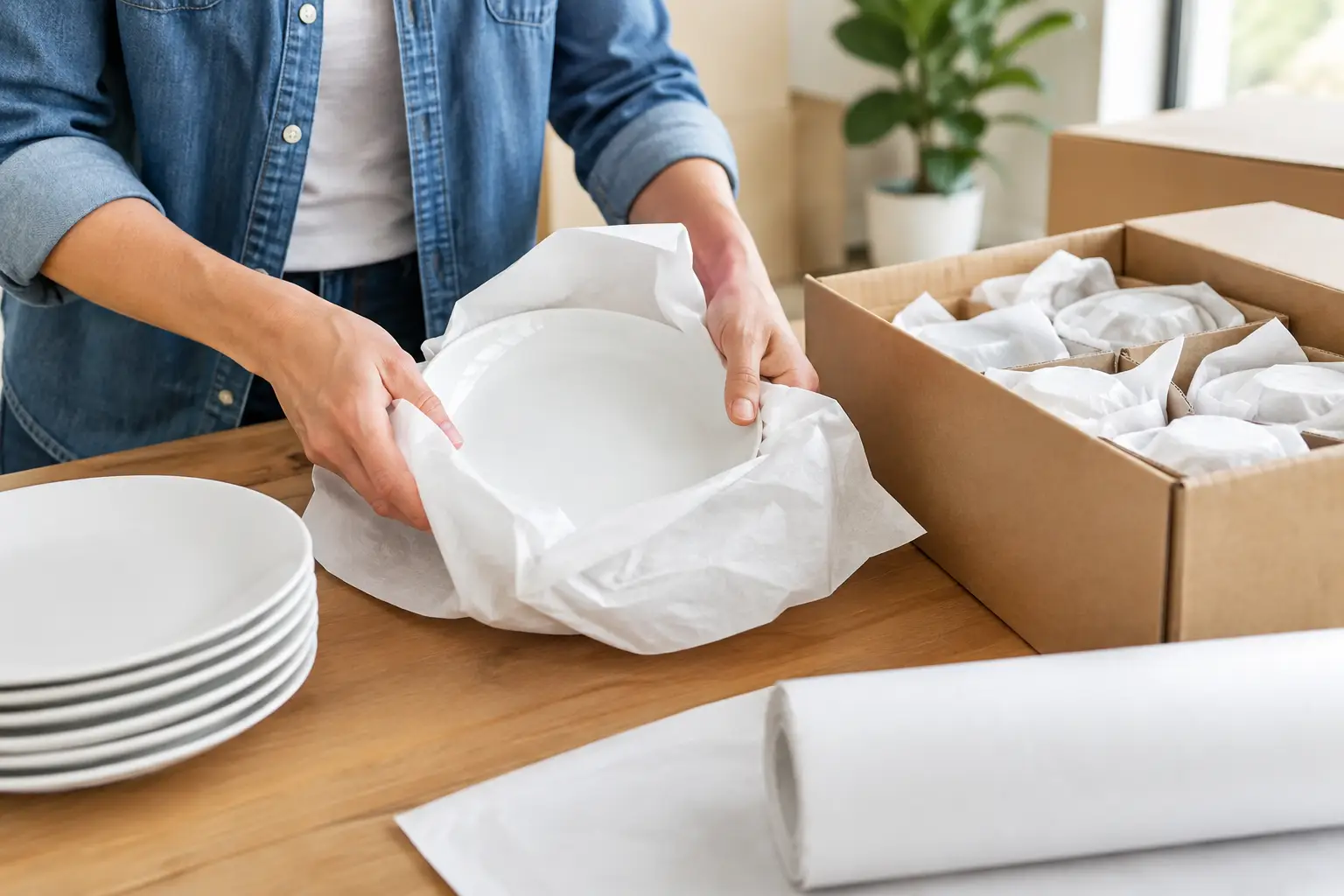
A box of dishes can look harmless until it shifts in the truck. One poorly supported stack of plates or an empty space around a serving bowl can turn a routine move into an expensive, frustrating cleanup. Knowing how to pack fragile dishes gives your kitchen items the protection they need and gives you one less thing to worry about on moving day.
The goal is not to use the most packing material possible. It is to create a snug, cushioned package where every dish is wrapped, every box is supported, and nothing has room to knock against something else. With the right materials and a little patience, most everyday dishes can travel safely from your old kitchen to your new one.
Start With the Right Packing Materials
Fragile kitchenware needs more than a few grocery bags and a reused box. Moving boxes designed for dishes are usually smaller and stronger than standard cartons, which helps prevent the box from becoming too heavy to carry safely. A dish pack box, often called a barrel box, is especially useful for china, stoneware, and glass serving pieces.
Have clean packing paper, bubble wrap, packing tape, and a permanent marker ready before you begin. Packing paper is the workhorse for plates, bowls, mugs, and glassware because it can be shaped around each item and tucked into open spaces. Bubble wrap is best reserved for particularly delicate pieces, such as crystal, fine china, or dishes with handles, lids, or raised details.
Avoid packing dishes in newspaper when possible. Ink can transfer to light-colored ceramics and may leave you with extra cleaning after the move. Towels and dishcloths can add padding around sturdy items, but they should not replace proper wrapping for breakable dishes. Their uneven thickness can leave pressure points inside the box.
How to Pack Fragile Dishes One Piece at a Time
Begin by preparing the bottom of the box. Crumple several sheets of packing paper and build a thick cushion, about two to three inches deep. This layer absorbs shock if the box is set down firmly or encounters a bump during transportation.
For plates, place one plate in the center of a stack of packing paper. Fold one corner over the plate, add a second plate, and fold the next corner over. Continue adding plates in small bundles, usually three or four at a time, with paper between each one. Wrap the bundle fully and secure the final fold with tape if needed.
Pack dinner plates, salad plates, and saucers on their sides rather than flat in the box. Think of the way records are stored in a crate. Plates are generally stronger along their edges, while a flat stack can transfer the force of a hard impact directly through the pile. Keep similarly sized plates together so they sit evenly.
Bowls should be wrapped individually or nested only when there is a layer of paper between each bowl. Place the smaller bowl inside the larger one gently, then wrap the set as a single unit. Do not force bowls together. If they fit too tightly, pressure can cause cracks before the box ever leaves your home.
Mugs and cups need extra attention around handles. Fill the interior of each mug with crumpled paper, wrap the handle carefully, and then wrap the full mug in another sheet. Pack them upright in the box with cushioning between each piece. For stemware, wrap the stem first, then the bowl, and place each glass upright with ample paper around it.
Serving platters, casserole dishes, and lids are often awkward shapes, so wrap them individually in several layers. Put cardboard or extra folded paper between a lid and its matching dish. If you pack them together, make sure they cannot rub against each other during the move.
Build a Box That Cannot Shift
Once wrapped, dishes need to be loaded with balance in mind. Start with heavier, sturdier pieces at the bottom and along the sides of the box. Place lighter bowls, cups, and smaller items above them. Keep the weight manageable. A packed dish box should feel solid, but it should never be so heavy that one person has to strain to lift it.
As you add layers, fill every noticeable gap with crumpled packing paper. This step is where many broken-dish stories begin. Even well-wrapped plates can crack if the bundle has room to slide, tip, or strike the box wall. Press lightly on each layer before adding the next. You want a secure fit, not enough pressure to damage the items.
Finish with another two to three inches of crumpled paper at the top. Close the box and give it a gentle shake. If you hear or feel movement, reopen it and add more cushioning. It is much easier to correct an unstable box while packing than to replace a broken set after delivery.
Seal the bottom and top seams with quality packing tape. For heavier boxes, run tape across the seams and around the box in both directions. This helps support the carton when it is lifted and reduces the chance of a bottom seam giving way.
Label Clearly So Boxes Receive Proper Care
Write “FRAGILE” and “DISHES” on multiple sides of every box, not just the top. Add “THIS SIDE UP” when you have packed cups, stemware, or other items that should remain upright. Clear labels help everyone handling the move understand what is inside and how to carry it.
It also helps to note the destination room, such as “Kitchen – Everyday Plates” or “Kitchen – Glassware.” That simple detail speeds up unloading and keeps fragile boxes from being stacked in the wrong room while you are trying to settle in.
Labels are useful, but they are not a substitute for strong packing. A box marked fragile still needs proper padding, a manageable weight, and a secure seal. The label is the final reminder, not the only protection.
Know Which Items Need Extra Protection
Every kitchen has a few pieces that deserve special handling. Family heirlooms, expensive china, handmade pottery, crystal, and sentimental serving dishes should be packed separately from everyday items whenever possible. Use additional bubble wrap, smaller boxes, and plenty of paper around these pieces.
If a dish already has a hairline crack, consider whether it should make the move at all. Transport can widen existing damage, even with careful packing. If you do choose to keep it, wrap it heavily, place it in a small well-padded box, and do not stack anything on top of it.
For very valuable or irreplaceable pieces, carrying them yourself may be the best choice. That decision depends on the item, the distance of your move, and your comfort level. Professional packing is also a practical option when you have a large china collection, limited time, or concerns about protecting delicate items correctly.
Common Mistakes That Lead to Broken Dishes
Packing too much into one box is a frequent problem. A heavy box is harder to lift, more likely to be dropped, and more likely to crush items near the bottom. Several smaller, properly packed dish boxes are safer than one overloaded carton.
Another mistake is mixing fragile dishes with loose kitchen tools, canned goods, or heavy cookware. A cast-iron pan or a metal utensil can cause damage even if it is only shifting a short distance. Keep dishes in their own boxes, and pack cookware separately.
Finally, do not leave dishes unwrapped because they will only be traveling a few miles. Short local moves still involve carrying, loading, braking, turning, and unloading. Every transition creates opportunities for items to shift. Careful preparation matters whether you are moving across Dallas-Fort Worth or across Texas.
When your schedule is tight or your kitchen includes items you cannot afford to lose, experienced help can make a real difference. Triple 4 Moving and Shipping Company provides professional packing and wrapping designed to protect belongings from pickup through delivery, so you can focus on making your new space feel like home.
Leave a Reply