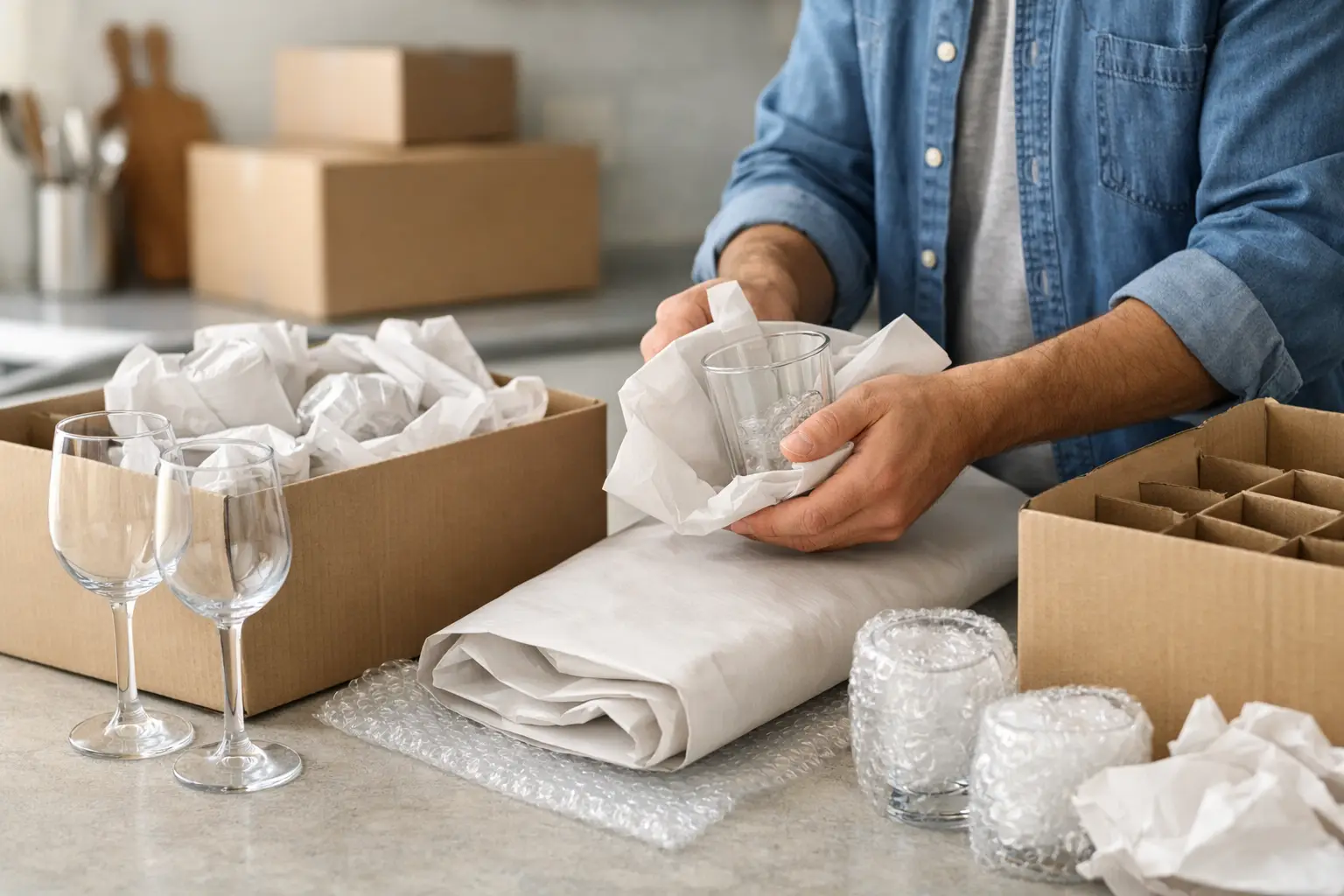
A single loose wineglass can turn a well-packed moving box into a box of shards. Kitchen glassware is vulnerable because it is thin, oddly shaped, and often packed alongside other heavy kitchen items. Knowing how to pack kitchen glassware correctly gives every glass its own protection and keeps weight from becoming the enemy during the move.
The goal is not to use the most packing paper possible. It is to prevent glass from touching glass, stop items from shifting, and keep each box light enough to carry securely. A careful system takes a little time, but it is far less stressful than replacing a favorite set of glasses after arriving at your new home.
Gather the right materials before you start
Start with sturdy, clean, small or medium moving boxes. Kitchen glassware becomes surprisingly heavy, so large boxes are usually the wrong choice. A smaller box limits the load and is easier for one person to lift without setting it down too hard.
Use plain packing paper for wrapping, along with packing tape and a permanent marker. Bubble wrap is useful for sentimental pieces, crystal, pitchers, and unusually delicate glassware, but paper is often the better everyday choice because it fills gaps and keeps glasses from moving inside the carton. If you have original boxes with fitted inserts, save them for specialty pieces such as stemware or a matching crystal set.
Avoid wrapping glasses in newspaper if possible. Newsprint can transfer ink, particularly in warm or humid conditions. Dish towels can provide extra cushioning for a few items, but they should not replace proper wrapping paper throughout the box. Towels create uneven spaces, and uneven spaces allow items to shift.
Sort glassware by shape, strength, and importance
Before wrapping anything, set aside chipped, cracked, or rarely used glassware. Moving is a practical time to decide what is worth taking. A glass with an existing crack is unlikely to survive a move, and packing it only adds unnecessary weight.
Group the remaining pieces by type. Everyday drinking glasses, mugs, stemware, bowls, serving dishes, and pitchers should be packed separately when possible. Similar shapes stack and support one another more predictably. Heavy glass bowls should not share a box with delicate wineglasses, even if both appear well wrapped.
For family heirlooms, handmade pieces, or expensive crystal, use an extra layer of protection and place them in their own clearly marked carton. It may feel inefficient to leave open space in a box, but properly filled cushioning is safer than squeezing a fragile item into the last available spot.
How to pack kitchen glassware one piece at a time
Create a padded base in every box before adding a single glass. Crumple several sheets of packing paper and place them along the bottom, aiming for a cushion about two to three inches thick. Do not use flat sheets alone. Crumpled paper absorbs impact far better.
For a standard drinking glass, lay one or two sheets of packing paper flat on your work surface. Place the glass near a corner, tuck paper gently into the opening, then roll the glass diagonally across the paper. Fold the ends inward as you roll so the rim and base are covered. The finished bundle should be snug but not tightly compressed.
Wrap each glass individually. Nesting unwrapped glasses inside one another saves space, but it creates direct glass-on-glass pressure that can lead to cracks. If you must nest durable tumblers, wrap each one first and add a layer of paper between them. This is best reserved for thick, everyday glasses rather than thin or decorative pieces.
Place wrapped glasses upright in the box whenever their shape allows it. Glass is generally strongest when packed as it would stand on a shelf, with its base down. Arrange pieces in close rows, but do not force them together. Add crumpled paper between rows and around the edges of the box.
Pack stemware with extra support
Wineglasses, champagne flutes, and other stemware need more attention because the stem is the weak point. First, lightly fill the bowl with crumpled paper. Then wrap the stem with a small sheet of paper before wrapping the entire piece in a larger sheet. This gives the stem support without placing pressure directly on it.
A divided dish pack or glassware carton is helpful for stemware, especially for a larger collection. However, dividers are not a substitute for wrapping. Each glass should still be individually wrapped before going into a compartment. If you do not have dividers, use plenty of paper to create separation and keep the box below a comfortable carrying weight.
Pack bowls, mugs, and pitchers differently
Wrap bowls one at a time, starting with a sheet inside the bowl and then covering the outside. Small bowls can sometimes be nested after wrapping, but avoid stacking more than three or four together. Place them on their sides or at a slight angle with cushioning between stacks.
For mugs, protect the handle first. Wrap it with a small piece of paper, then roll the mug in a larger sheet. Pack mugs upright and keep them away from heavier objects. Handles are exposed and can break if a mug shifts against the side of a box.
Pitchers, carafes, and large serving pieces need paper inside their openings, around handles, and around spouts. These items often have uneven weight distribution, so place them toward the center of a box with cushioning on every side. A small box is still the safer choice, even if only a few pieces fit.
Build the box in layers and manage the weight
Once the first layer is complete, add a layer of crumpled packing paper before starting the next one. Think of the paper as a shock absorber between levels. Do not place a heavy glass bowl directly on top of a row of drinking glasses.
As you fill the box, test for movement. Gently hold the sides and give the carton a small shake. If you hear clinking or feel items shifting, add more paper. A properly packed box should feel full and stable, not tightly crushed. There is a difference between eliminating empty space and forcing too much into one carton.
Finish with another two to three inches of crumpled paper at the top. Close the flaps without pressing them down hard. If the flaps will not close naturally, remove an item and repack it in another box. Overfilled boxes are more likely to open, buckle, or transfer pressure to the glass inside.
Seal the bottom and top seams with quality packing tape. For heavier boxes, add one or two strips of tape across the seams for reinforcement. Never rely on a box marked “fragile” to make up for weak packing or poor sealing.
Label for careful handling and easy unpacking
Clearly label each carton on at least two sides. Write the destination room, such as “Kitchen,” plus a specific description such as “Everyday Glasses” or “Stemware.” Add “Fragile” and “This Side Up” where appropriate, particularly for boxes holding glasses packed upright.
Specific labels help in two ways. They tell anyone carrying the box that it requires careful handling, and they prevent you from opening every kitchen carton to find coffee mugs or wineglasses on your first night. If a box contains heirlooms or high-value crystal, mark it discreetly and keep it in a place where it will not be stacked under heavier cartons.
During loading, fragile kitchen boxes should ride on a flat, stable surface and should never be placed beneath appliances, furniture, or dense boxes of books. They also should not be left loose in a vehicle where they can slide during turns or stops. Careful wrapping matters, but safe loading and transportation complete the job.
When professional packing is the better option
Packing your own everyday glasses can be manageable when you have time, materials, and a clear workspace. It becomes more demanding when you are moving a large household, handling an extensive collection of crystal, or trying to pack while managing work, children, or a tight closing date.
Professional packers bring the materials, wrapping methods, and handling discipline needed to protect delicate kitchen items from the beginning. At Triple 4 Moving and Shipping Company, trained moving specialists can handle packing, loading, transportation, and the other hands-on details that make a move feel more manageable.
Give yourself enough time to pack glassware slowly rather than treating it as a last-minute task. A steady, well-cushioned box is one less thing to worry about when it is time to settle into your new kitchen.
Leave a Reply