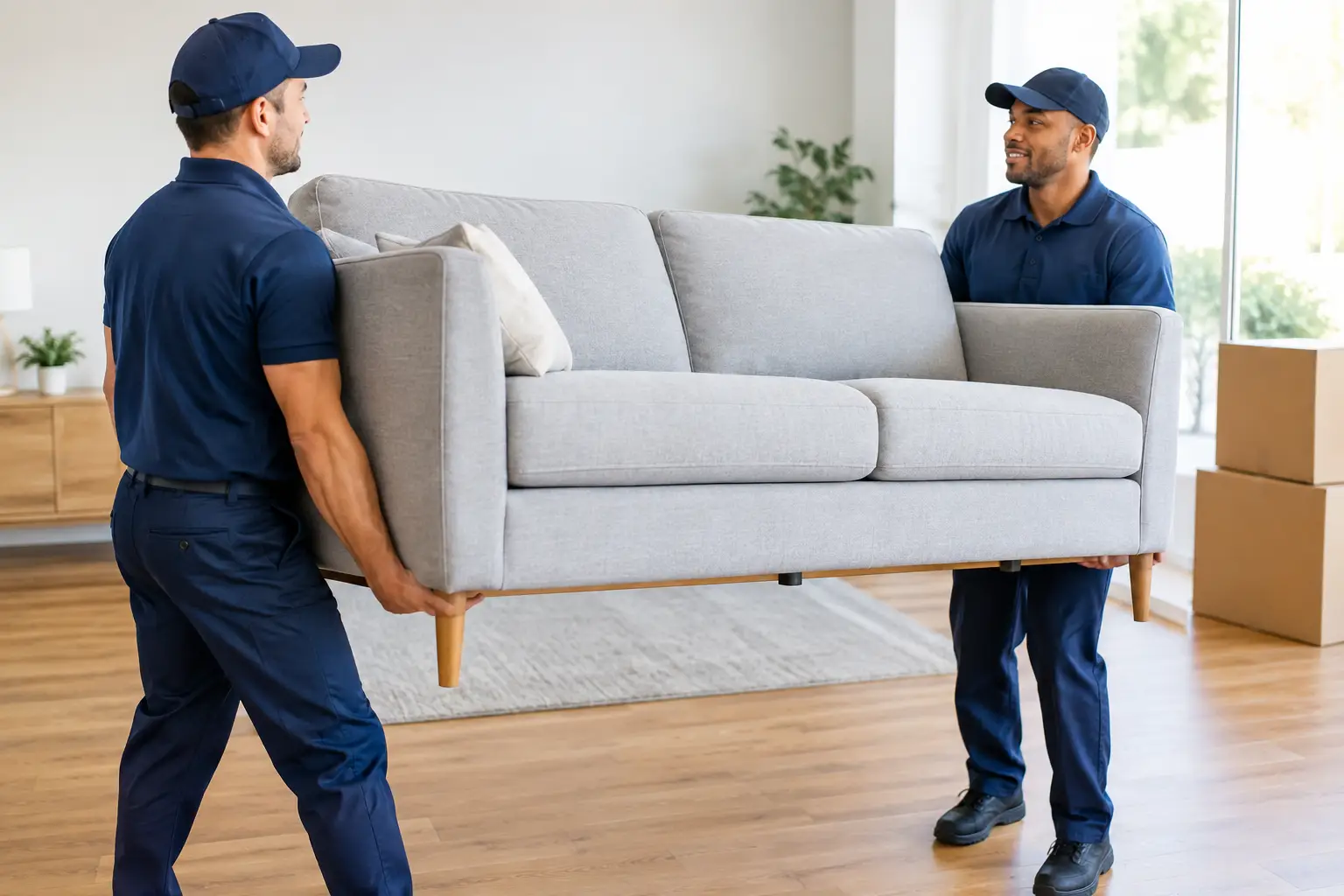
A fully assembled wardrobe can look ready to load until it meets a narrow stairwell, a tight apartment turn, or the door of a moving truck. So, can movers move assembled furniture? Often, yes. Professional movers can safely move many assembled pieces, including dressers, tables, bookcases, bed frames, and cabinets. The right choice depends on the furniture’s size, construction, condition, and the path it must travel from your home or office to the truck.
Keeping a piece assembled can save time at both ends of the move. But forcing an oversized or fragile item through a doorway can cause far more trouble than careful disassembly. A dependable moving team assesses the item and the route before deciding how to handle it.
When Movers Can Move Assembled Furniture
Movers commonly transport assembled furniture when it is sturdy, fits safely through the property, and can be protected in transit. Solid wood dressers, dining tables with removable legs, compact bookcases, nightstands, and many office desks may travel assembled without a problem.
The key issue is not simply whether the item can fit through the front door. Movers also consider hallways, elevators, stairs, landings, gates, truck access, and the amount of room needed to carry the piece without scraping walls or putting anyone at risk. A dresser that clears one doorway may still be too wide to turn around a staircase landing.
Furniture that remains assembled should still be prepared properly. Drawers may need to be emptied or secured, removable shelves taken out, and glass components removed. Professional moving blankets, stretch wrap, corner protection, and careful loading help prevent scratches, dents, and shifting during transportation.
When Assembled Furniture Should Be Taken Apart
Some furniture is safer to disassemble, even when it appears possible to move in one piece. Large armoires, sectional sofas, bed frames, wall units, oversized desks, and tall bookcases often become easier and safer to transport once broken down into manageable sections.
Disassembly may be the better option when a piece is top-heavy, has delicate joints, contains glass, or is made from particleboard or laminate materials that can loosen under strain. It is also useful when moving from an upper-floor apartment, through a historic home with tight passages, or into an office building with limited elevator space.
A good mover does not disassemble furniture simply to add steps to the job. The decision should protect the furniture, the home, and the people moving it. In many cases, removing table legs, separating a sectional, or taking apart a bed frame creates a much safer route with minimal added time.
Furniture That Often Needs Disassembly
Certain pieces deserve an advance conversation with your moving company because their size or design creates special handling needs:
- Platform beds, bunk beds, and large bed frames
- Sectional sofas with detachable pieces or recliner mechanisms
- Large dining tables, especially those with glass tops or fixed legs
- Armoires, entertainment centers, and tall shelving units
- Modular office desks, conference tables, and cubicle systems
- Furniture that was assembled inside a room and may not fit back out intact
If the item requires tools, has a complicated mechanism, or came with manufacturer-specific hardware, mention it when requesting your quote. That gives the moving team time to plan for the work and confirm what level of disassembly and reassembly is appropriate.
What Movers Look for Before Making the Call
Experienced movers make handling decisions based on more than an item’s measurements. They look at how the furniture was built and whether it can withstand being lifted, tilted, wrapped, and secured in a truck.
Solid wood furniture is often strong enough to move assembled, although its weight may require extra hands. Flat-pack furniture can be less forgiving. Repeatedly assembled particleboard pieces may have weakened connections, stripped screws, or loose cam locks. A mover may recommend disassembly, limited handling, or a different approach if an item is already unstable.
Antiques and heirlooms need their own level of care. Older furniture may have brittle veneer, loose joints, fragile hardware, or hidden damage that is not obvious until the piece is lifted. For these items, the best plan may involve custom wrapping, careful partial disassembly, or moving the piece assembled with additional protection. There is no one-size-fits-all answer.
The route matters just as much. Before moving day, measure the widest point of large furniture and compare it with doorways, stairwells, hallways, elevator openings, and sharp turns. Let the mover know about flights of stairs, low ceilings, parking restrictions, or building move-in rules. Clear information makes for a more accurate plan and a fairer quote.
How to Prepare Assembled Furniture for Movers
A little preparation helps your movers work efficiently while reducing the chance of damage. Empty dressers, desks, cabinets, and storage benches unless your moving coordinator advises otherwise. Heavy contents increase the strain on joints and make furniture harder to carry safely.
Remove loose shelves, glass panels, lamps, mirrors, and decorative items. If a table has leaves, take them out and set them aside for wrapping. Keep hardware from any furniture you disassemble in a labeled bag, and secure that bag to the related furniture piece or place it in a clearly marked box.
Make the route accessible. Clear shoes, boxes, rugs, and small furniture from hallways and entryways. If possible, reserve an elevator and arrange suitable parking before the crew arrives. These simple steps give movers room to protect your furniture and keep the schedule moving forward.
Do not tape drawers or doors directly to finished wood or delicate surfaces. Adhesive can damage paint, stain, or veneer. Movers typically use professional wrap and padding methods that hold components in place without putting the finish at unnecessary risk.
What About Furniture That Cannot Be Disassembled?
Some furniture is built as a single piece, and some pieces are simply too valuable or too fragile to take apart. That does not mean they cannot be moved. It means the crew needs the right plan.
A large one-piece china cabinet, for example, may need extra padding, a specific carrying angle, and a carefully chosen route. A piano, oversized safe, or exceptionally heavy commercial item may require specialized equipment and an advance assessment. These are not items to surprise a moving crew with on move day.
Be open about unusual items during the quote process. Share approximate dimensions, photos when requested, and details about access at both locations. A professional team can then determine whether the item can move assembled, needs partial disassembly, or requires special equipment and additional movers.
Furniture Assembly Is Part of a Complete Moving Plan
Moving furniture is not just about getting it onto a truck. The goal is to have it arrive in usable condition and fit comfortably in its new space. That is why furniture disassembly and reassembly are valuable services for many residential and commercial moves.
For a family, this may mean getting beds reassembled so the first night in the new home feels settled. For an office, it may mean setting up desks and workstations in an organized order to reduce downtime. The best plan balances speed with careful handling rather than treating every item the same.
At Triple 4 Moving and Shipping Company, certified moving specialists can help evaluate your furniture, access conditions, and service needs before moving day. Whether a piece stays assembled or needs to come apart, the focus is on careful handling, clear communication, and an organized move from start to finish.
Before you commit to moving a large piece assembled, take a few minutes to measure it, walk its route, and discuss it honestly with your moving team. That small bit of planning can protect a favorite piece of furniture and make the whole move feel much more manageable.
Leave a Reply